



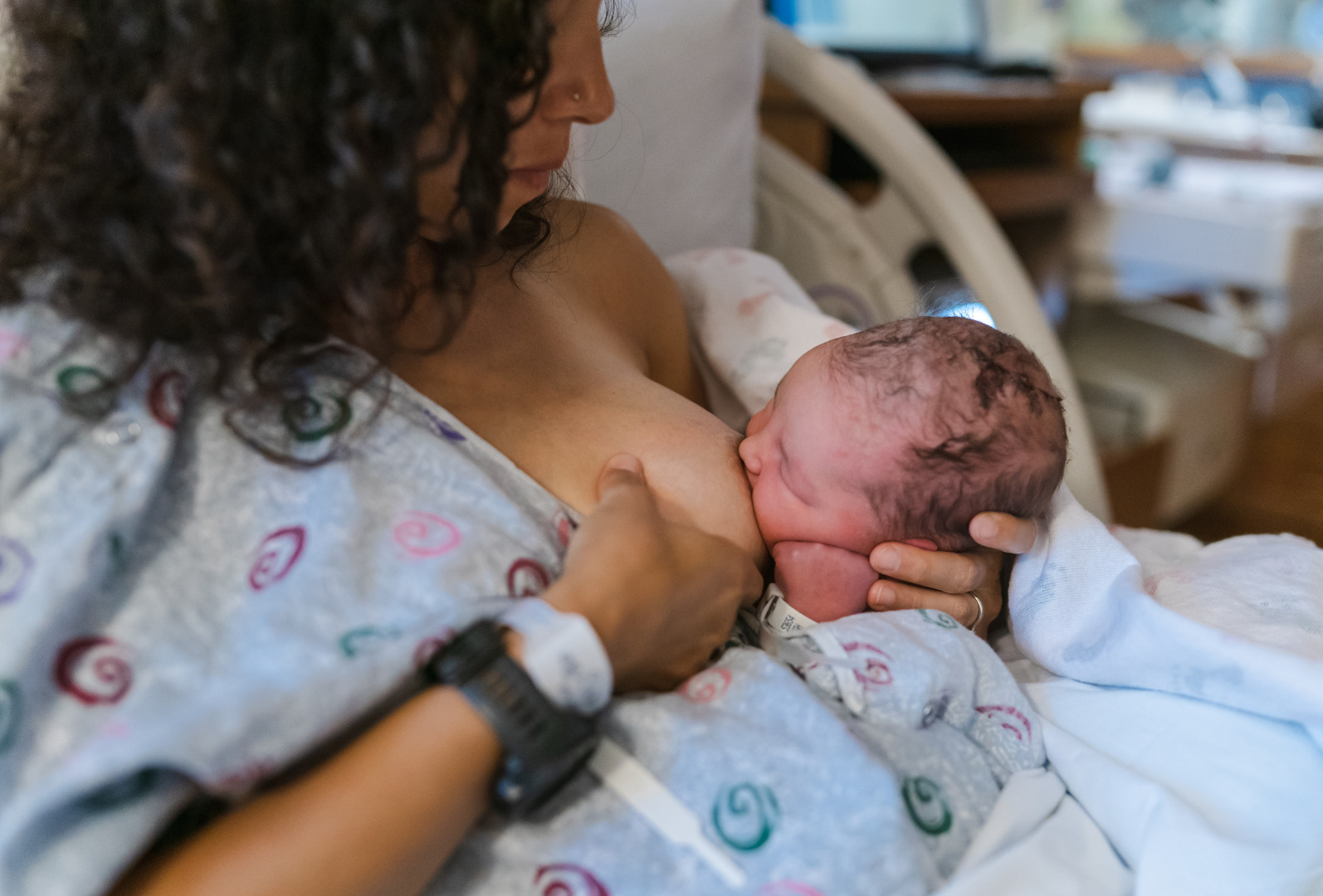
Explore the benefits of breastfeeding
This OPENPediatrics video discusses the benefits of breastfeeding for babies and lactating parents.
Watch the video, then explore the sections below to learn more about these benefits and how breast milk supports your baby’s growth and development.
Every family’s circumstances are different. You deserve reliable information and respectful support as you work toward your feeding goals.
This video discusses the short-term and long-term benefits of breastfeeding for the baby and lactating parent. Source: OPENPediatrics
Benefits of Breastfeeding
Benefits for Babies
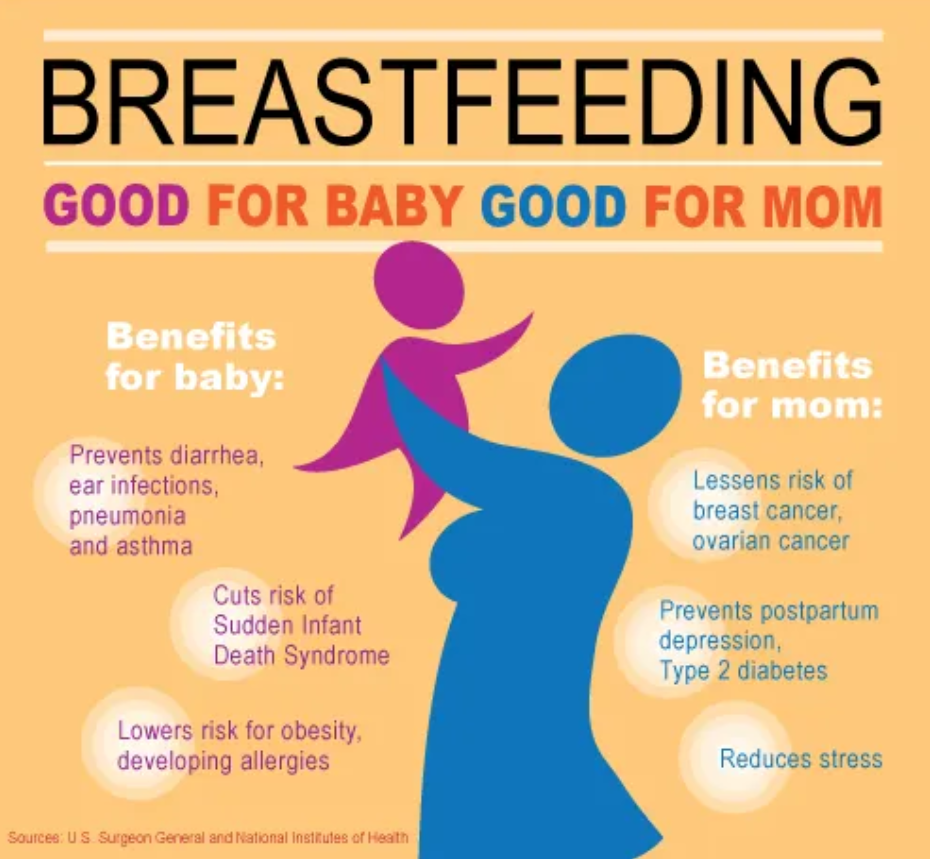
- Breast milk provides the nutrients babies need to grow and develop.
- Breast milk changes as a baby grows and can meet the baby’s changing needs.
- Breast milk contains antibodies and other protective parts that help support the baby’s immune system.
- Breastfeeding lowers the risk of some ear, respiratory (breathing), and gut infections.
- Breastfed babies have a lower risk of sudden infant death syndrome, also called SIDS.
- Breastfeeding may lower the risk of asthma, obesity, and type 2 diabetes later in life.
- The close contact during breastfeeding can help babies feel warm, calm, and secure.
Benefits for Lactating Parents
- Breastfeeding releases hormones that help the uterus contract and reduce bleeding after birth.
- Breastfeeding may help the body recover after pregnancy and birth.
- Breastfeeding lowers the risk of breast and ovarian cancers.
- Breastfeeding may lower the risk of type 2 diabetes and high blood pressure.
- The close contact during breastfeeding can support bonding with the baby.
Benefits for Families
- Breast milk is available without mixing, measuring, or heating.
- Breastfeeding can save money on formula and feeding supplies.
- Breastfeeding may mean fewer illnesses and medical visits for the baby.
- Breastfeeding can make nighttime feeding and travel easier for some families.
Did you know?
Breastfeeding offers many short and long-term benefits to both babies and lactating parents.
How does breast milk offer benefits?
- Breast milk, also called human milk is more than food. It is a living and changing system with more than 1000 nutrients and other protective components.
- Many components in human milk have one main job, while others nourish, protect, and communicate at the same time.
Nourish
- Fats, proteins, and carbohydrates provide energy and building blocks for growth.
- Vitamins and minerals help build strong bones, blood, organs, and tissues.
- Human milk changes over time to help meet your baby’s changing needs.
Protect
- Antibodies and immune cells help your baby’s body recognize and fight germs.
- Special sugars help good gut microbes grow and can make it harder for some germs to cause infection.
- Proteins, enzymes, and other protective parts help support the gut and immune system.
Communicate
- Hormones, growth factors, and other signals carry messages from milk to your baby’s cells.
- These messages help guide the development of the gut, immune system, and other organs.
- Flavors from the foods you eat can enter your milk and introduce your baby to different tastes.
- Human milk also contains tiny particles and living cells. Scientists are still learning about all the jobs they may perform.
Many breast milk components work together. A component that nourishes your baby may also help protect your baby and guide their development.

Breast milk not only nourishes babies with the most digestible forms of nutrients but also offers protective compounds that fight harmful bacteria and viruses and compounds that communicate and guide the baby’s development. Source: Smilowitz et al., AJCN 2023.
Skin-to-skin contact
- Skin-to-skin means placing your diapered baby directly on your bare chest.
- Ask to hold your baby skin-to-skin as soon as possible after birth.
- Skin-to-skin can usually begin after a vaginal or cesarean birth when you and your baby are medically stable.
- It helps keep your baby warm and supports steady breathing, heart rate, and blood sugar.
- It can calm your baby and help you begin bonding.
- Skin-to-skin helps your baby use natural feeding behaviors, such as rooting and moving toward the breast.
- It can help your baby begin breastfeeding and support your milk-making hormones.
- Keep your baby skin-to-skin through the first feeding when possible. Routine care can often be done while your baby stays on your chest.
- If skin-to-skin cannot happen right away, you can begin when you and your baby are ready. It is still helpful during the first days and weeks.
- Partners can also provide skin-to-skin contact when you are not able to do so.
Watch this video on the benefits of skin-to-skin contact in the early period after birth. Source: St. Louis Children's Hospital.
Practice skin-to-skin safely
- Stay awake while holding your baby skin-to-skin.
- Keep your baby’s face where you can see it.
- Make sure your baby’s nose and mouth are not covered.
- Keep your baby’s head turned to one side and the neck straight.
- Ask another adult to watch if you feel sleepy, weak, or affected by medicine.
- Move your baby to a separate, firm, flat sleep space if you might fall asleep.

Did you know?
When your baby rests skin-to-skin on your chest, your body helps keep your baby warm. Skin-to-skin contact can also help steady your baby’s breathing and heart rate, reduce crying, and support the hormones involved in breastfeeding. Source: The Mindful Birth Group.
Breastfeeding during the first hours after birth
- The first hours following birth are important for supporting lactation.
- Keep your baby close and watch for early feeding cues.
- Your baby may bring their hands to their mouth, move their head, open their mouth, or look for the breast.
- When possible, offer the breast within the first hour after birth. Research shows early breastfeeding is important for later milk production.
- Give your baby time to move toward the breast and begin feeding. Some babies latch quickly, while others need more time and help.
- Avoid forcing the breast into your baby’s mouth. Support your baby and wait for a wide-open mouth.
- Your baby’s first feeding may be short or long. Every baby is different.
- Your breasts are already making colostrum—the first milk your baby needs.
- Colostrum comes in small amounts because your newborn has a small stomach.
- Ask a nurse or lactation professional for help if breastfeeding is painful or your baby has trouble latching.
- If you and your baby must be separated, ask for help expressing colostrum as soon as possible.
- Keep your baby in the same room with you when possible. Staying close makes it easier to notice feeding cues and breastfeed often.
Within the first few hours after birth, most healthy newborns will instinctively move to their lactating parent's breast and attach on their own. This video shows early breastfeeding initiation through the journeys of 3 newborns and ways to ensure the success of this vital practice for any new lactating parent and baby. Source: Global Health Media Project. (for internal purposes this video: https://youtu.be/jyOt9aB6sOo?si=Ls7zyNzcjnJiIokk)
Finding a comfortable position and helping your baby latch
There are several ways to hold your baby for breastfeeding. Explore different positions to find what feels comfortable for both of you. Learn how to help your baby latch—take your nipple and some of the darker skin around it into their mouth—and recognize signs that feeding is going well.

Positions for breastfeeding
How you hold your baby can help them feed more easily. This video explains key points for positioning and shows several breastfeeding positions you can try. Source: Global Health Media Project.

Attaching your baby at the breast
A deep latch helps your baby get milk and makes breastfeeding more comfortable. This video shows how to help your baby attach deeply to your breast. Source: Global Health Media Project.
What to expect during the first days and weeks of breastfeeding
First hours
- Uninterrupted skin-to-skin contact.
- Early feeding cues and the first breastfeed.
- Colostrum is present in small, concentrated amounts.
First 2–5 days
- Frequent feeding—typically 8–12 or more times in 24 hours.
- Small, variable amounts at each feeding.
- Cluster feeding and periods of sleepiness.
- Increasing milk production and breast fullness.
- Changing infant urine and stool patterns.
- Normal early infant weight loss and the importance of following-up with your baby's provider.
- Ask for help at any time if breastfeeding hurts, your baby has trouble feeding or is hard to wake for feedings, your baby’s skin or eyes look yellow, or your baby has fewer wet or dirty diapers than expected.
First 1–2 weeks
- Milk production becoming more established.
- Feeding remaining frequent and sometimes irregular.
- Latch becoming more comfortable with practice.
- Expected infant weight recovery during follow-up.
- Ask for help at any time if breastfeeding hurts, your baby has trouble feeding or is hard to wake for feedings, your baby’s skin or eyes look yellow, or your baby has fewer wet or dirty diapers than expected.
Following weeks
- Growth spurts and temporary increases in feeding frequency.
- Your breasts may begin to feel softer without indicating low supply.
- Feeding duration and spacing vary among babies.
- Your milk production gradually adjusts to the baby’s needs.
- Pump output and breast fullness are not reliable measures of total milk supply.
- Ask for help at any time if breastfeeding hurts, your baby has trouble feeding or is hard to wake for feedings, your baby’s skin or eyes look yellow, or your baby has fewer wet or dirty diapers than expected.

Did you know?
A newborn’s stomach is very small, so babies take small amounts of colostrum at a time. This is one reason newborns need to breastfeed often—usually 8–12 or more times in 24 hours. Source: Babies First.
Signs your baby is getting enough milk
- Look at your baby's feeding, diapers and growth.
- During the early weeks, your baby breastfeeds at least 8–12 times in 24 hours.
- At times, your baby may want to breastfeed many times close together. This is called cluster feeding. It is common, especially during the early weeks.
- Your baby has deep, steady sucks with short pauses.
- Your baby’s cheeks stay rounded instead of pulling inward.
- You can see or hear your baby swallowing during feedings.
- Your breasts may feel softer after feeding.
- Your baby seems relaxed or satisfied after at least some feedings.
- Your baby has more wet diapers each day during the first several days.
- By about day 5, your baby usually has at least 5–6 wet diapers each day.
- Your baby’s first stools are dark and sticky. They change to green or brown and then become yellow during the first several days.
- During the early weeks, breastfed babies usually have several loose, yellow stools each day.
- After about 4–6 weeks, some healthy breastfed babies poop less often. Weight gain and wet diapers remain important signs that feeding is going well.
- After the normal early weight loss, your baby begins gaining weight.
- Your baby’s healthcare provider will check your baby’s weight and growth to make sure feeding is going well.

A common concern of a new lactating parent is whether her baby is getting enough milk. This video shows signs to tell whether the baby is feeding well. Source: Global Health Media Project.
When to Ask for Help
Contact your baby’s healthcare provider or a lactation professional if:
- Your baby feeds fewer than eight times in 24 hours.
- Your baby is very sleepy or difficult to wake for feeding.
- You rarely see or hear swallowing.
- Feedings are painful or your baby cannot stay attached to the breast.
- Your baby has fewer wet or soiled diapers than expected.
- Your baby’s urine stays dark or you see reddish-orange crystals after the first few days.
- Your baby’s stool is still dark by day 5.
- Your baby looks more yellow, has a dry mouth, or seems weak.
- You are worried about your baby’s feeding or weight.

Diaper Output for Breastfed Babies
This chart shows how many wet diapers and stool diapers to expect in the first week. Figure adapted from source: Milkology.
Putting it all together
In this lesson, you learned the benefits of breastfeeding and how to get started with breastfeeding: holding your baby skin-to-skin, noticing feeding cues, finding a comfortable position, and helping your baby latch. You also learned about colostrum—your first milk—and how feeding often helps build your milk supply. The video below brings these steps together so you can review what you’ve learned.
This video brings together many of the ideas you have learned about getting breastfeeding off to a strong start. Source: Alive and Thrive.